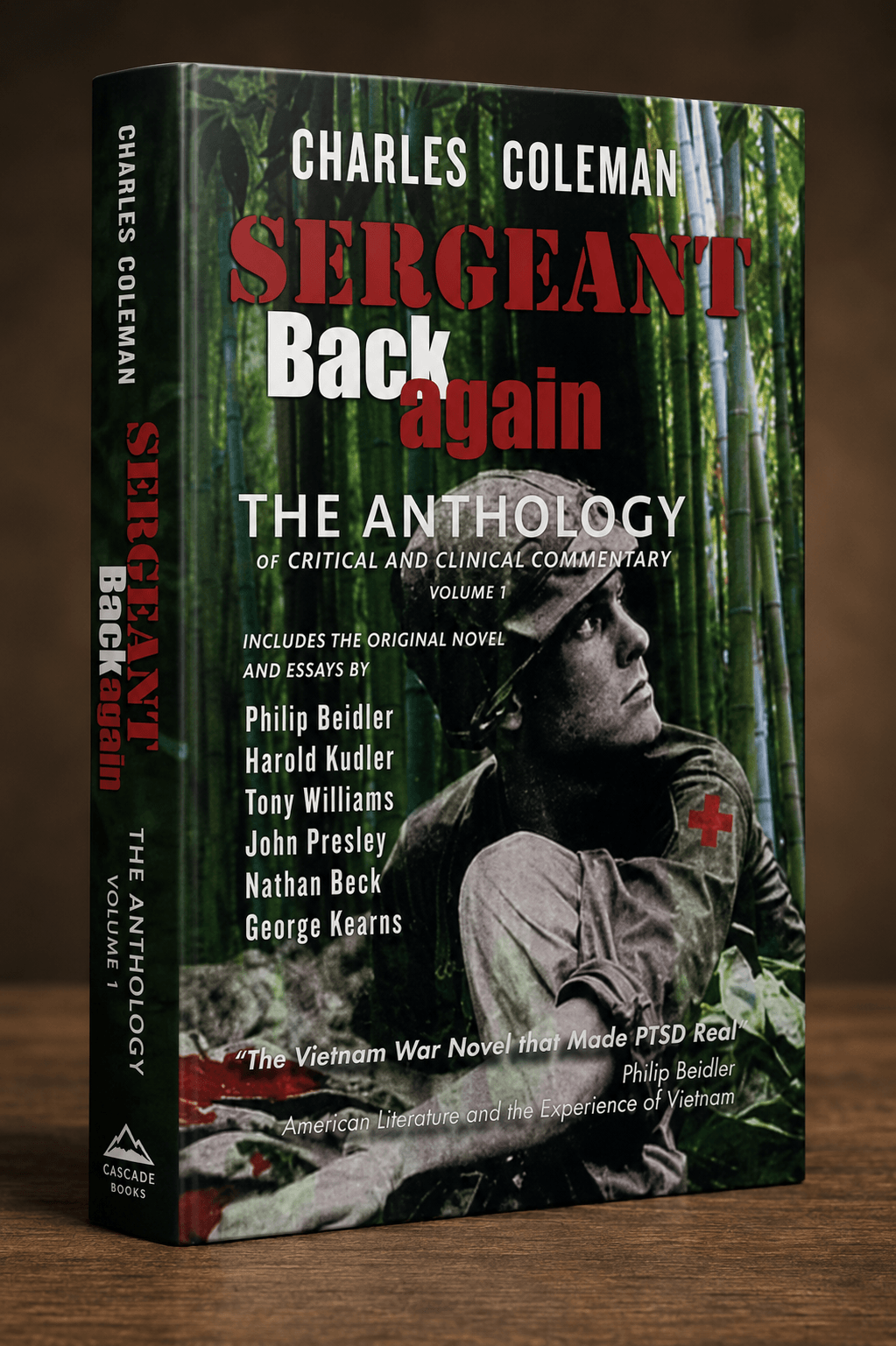
The publication of Bao Ninh’s, The Sorrow of War (Noi buon chien tranh) in Vietnam in 1991 (reprinted from a 1990 mimeograph version) and the publication of my “war novel,” Sergeant Back Again (Harper & Row in the US) were separated by a decade—since mine hit the bookstores in December, 1980. That was five years and nine months after the North Vietnamese Army (NLF) declared conclusive victory over the South by finally overrunning Saigon and Tan Son Nhat Airport and roundly defeating the American forces who had more than supported “the corrupt regime” of the South with $1.2 trillion (in 2025) dollars; with the loss of 58,279 American servicemen killed; with 300,000-plus wounded (not including the “walking wounded”) and-in 1980-with the invention of a new term for a new (US-borne) psychiatric disorder originally called post-traumatic stress syndrome and later, of course, PTSD (post-traumatic stress disorder), of which some 250,000 Viet vets still suffer with approximately 100,000 confirmed suicides from 1979-2019.
Back in the day, the US Embassy and nearby Defense Attache Office buildings were located in the center of Saigon, around six miles from the Airport. But they might as well have been 6,000 miles apart given what really went down at those two locations over those final two days of “The War” ending as it did on April 29-30, 1975. Days as different as our two novels. As different as our two countries. Our two states of mind. As different as our two chapter beginnings and our two endings. As different as our voices, tenses, settings and lives lived and imagined but all finally coalescing as mirror images of each other recording the same sorrowful, traumatic outcomes.
I hadn’t read The Sorrow of War-hadn’t even heard of it-until 2002 when an Army thoracic surgeon with whom I reconnected while visiting an old buddy in the death throes of chronic lymphocytic leukemia (from exposure to Agent Orange at Walter Reed) mentioned it to me over lunch in the staff dining hall. The “mention” and brief description of Bao Ninh’s novel hit me like a bolt of lightning-I was electrified, supercharged yet somehow fearful and suspicious, was I about to meet my counterpart in a book translated from Vietnamese who had survived tell the story? The same story-only his from the victor’s POV? Mine from the defeated? Afterall, there was only one Vietnam War. . . right?
But is that true? Can there two, or more? Can there be the journalist David Halberstam’s “Vietnam War” in The Best and The Brightest, or in Vietnam War correspondent Philip Caputo’s A Rumor of War; or Joe Galloway’s, the photojournalist who inspired the movie We Were Soldiers; or Army veteran Gustav Hasford’s in The Short Timers and later Full Metal Jacket; or the unnamed American photojournalist cum stoned philosopher played by Dennis Hopper in Apocalypse Now, or Robin Moore’s version, a reporter embedded with the Green Berets and who appears as such in his 1965 novel and movie (1968) by the same name, or how about . . .
The Sorrow of War with protagonist Kien, Ninh’s semi-autobiographical Everyman-soldier/journalist “recording and reporting” from the war-ravaged terrain in-and later out of-the uniform of the “communist” 27th Youth Brigade? The Vietnamese didn’t call it the Vietnam War: no, they called it “The American War,” “The War of Resistance Against America to Save our Nation,” “The War Against the US Invaders.” So just how many wars comprised the Vietnam War?
 After I dared myself to open the cover of Sorrow and started reading, I was shaking in chills and fever reliving the horribly painful cries, screams and the grotesque angularly of those disjointed humanoid shapes that often emerged in the half-light of the confines of Chambers Psychiatric Pavilion, Brooke Army Medical Center, Fort Sam Houston, San Antonio, Texas, in the wards of what would become the locus of Sergeant Back Again in the guises of his many unannounced “visitations” over a 90-day incarceration.
Tears ran down my cheeks as I closed my eyes and leaned back into my chair and instantly realized that Ninh, in writing about his “American War,” was already far more successful in using Kien as his body-double than I having written about my “Vietnam War” using Andy Collins as my hyper-sensitized “mental-doppelganger.”
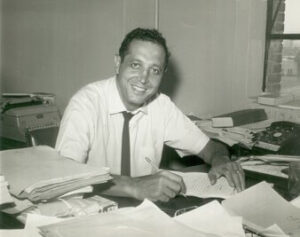 Interestingly, in acquiring my novel, the Senior Fiction editor at Harper & Row at the time, Ted Solotaroff, made the “recommendation” that I “keep the novel just as it is but rewrite it into third person before acceptance for publication.”
“Say what?”
“It’s too macabre, Charles. Too harrowing in first person. It’s just . . . too close to the bone. You need to put some space, some distance between your voice and the reader’s eyes and ears. Can you do that? Put yourself at arm’s length?”
“From myself?”
Interesting as well that Ninh begins Sorrow in the third person with Kien but then, with the turn of a page, switches into first person and-if that’s not enough-Ninh actually shows up as himself, as a character, and then as the author of his own novel! Talk about poetic license! But it worked! Rather than creating and maintaining the distance between first and third person, Ninh closes it, making his novel ultimately more personal than mine: he rejoins his “He” and “I” into the one person they were all along! (Is it any wonder that I was originally diagnosed with multiple personality disorder?)
But in the end, Ted was right: even though I had to forego Ninh’s “closure-to-first-person,” there was no way I could have possibly “reported” on the “insanity” of myself and that of my bunkmates locked up in Chambers Pavilion as me-myself-and-I.
There was no way an “I” could possibly get inside “their” heads unless I could get out of my own-and therein lay precisely the problem that Ted had surfaced with his solution when he said, “I still have a few good voices in my head. And I know for certain you do too. Let your characters speak and act for themselves. And not under the thumb of your hemostats or pen.”
Around seven months after Sergeant was published, my agent got a call from the office of film producer Bernie Sofronsky in LA who was interested in seeing if Sergeant might be a good fit for a made-for-TV movie or miniseries. (Really? I thought to myself. ) The only made-for-TV movie/miniseries that looked at war (the Korean War in this case) from a med-surg-fake-psych standpoint was M*A*S*H-in a comedy! War as a fucking comedy! With “Suicide is painless” for its theme song?! You gotta be kidding me! (Sergeant has been called “a comic novel,” but only in the sense that the characters create a dark parody of themselves individually and collectively and the circumstances by which they ended up in the closed wards of an Army mental hospital. There is a correlation lost in the translation of “comedy” to slapstick, frivolous “humor” by splicing in audible “canned laughter”-called a “laugh track” by the producers at CBS but-interestingly-against the wishes the original writers (Gilbert and Marks). I’ve often wondered how M*A*S*H would have come across without the Ha-Ha-Ha-s.
M*A*S*H made me sick to my stomach. (I could never watch it and even got arrested by the dismounted RCMP in a movie theater in Ottawa for destroying a carbon-arc projector airing M*A*S*H reruns.) And I had my doubts, for sure, especially when someone on Bernie’s staff made a comment about how Sergeant was somehow analogous to/with Ken Kesey’s 1962 novel, One Flew Over the Cuckoo’s Nest, later released in 1975 as the film version of the same title starring Jack Nicholson as a darkly satirical psychopath. (Really? McMurphy vs Nurse Ratched in a miniseries of Sergeant?)
But Bernie persisted saying that America needed to see the real consequences of the Vietnam War “up close and personal,” and so hired playwright and screenwriter Larry Roman (Under the Yum Yum Tree) to “take a first pass at it.” I met with Larry numerous times in the course of four-to-five months to “adapt” Sergeant to a screenplay, but it was mighty tough sledding for reasons that makes Sergeant that much more difficult to portray in the allocated 120 minutes for the premier pilot than Sorrow could ever be. Of course, I didn’t know that at the time because I didn’t know that Sorrow even existed and, besides, Bernie mandated that my “required reading” start with Joseph Heller’s Catch-22 followed by Buck Henry’s “genius” screen adaption in which Henry-coincidentally-wrote himself into the script as the character of Lt. Colonel Korn, much like Ninh does toward the end of Sorrow. (If they got away with it, why couldn’t I?)
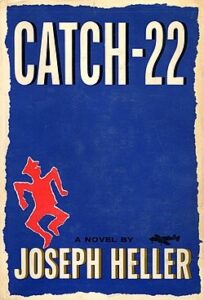 Reading Catch-22 and the screenplay back-to-back frustrated me to no end. Every time I sat down going over scene-by-screen revisions with Larry or re-revisions of re-re-revisions of Sergeant by changing scene sequences, pulling characters out of this scene and inserting them into the next all the while dumbing down the clinical aspects of the novel to suit a clueless audience’s understanding of war-related psychological “disorders”. . . it was more maddening than writing the damn novel itself.
As I opened my eyes again that night after first closing them from reading Sorrow, I began to get an inkling of why Ninh’s “version of The American War” was so much easier to follow and much more emotionally charged than mine-at least in the beginning with Kien physically “revisiting” and retrieving the remnants of his dead comrades lying on a rotten, blood-soaked battlefield while mine starts in media res in the confines of a small, air- conditioned office on a closed psych ward with my protagonist, Andy Collins, in the midstof a dislocated “conversation” with his Army shrink, Dr. Nieland. Right there, in these first few footsteps into print, two authors’ journeys began to diverge along a common theme staring into the same hearts of darkness from two different angles: action in Sergeant is more often triggered by sudden, spontaneous recollections of the immediate past in mentally remastered “flashbacks,” whereas conscious thought in Sorrow is less apparent and overshowed by fight-or-flight hindbrain impulses, at least in the early stages of Ninh’s novel.
In that sense, my characters are reacting more cerebrally to their pasts relative to their current, involuntary confinement in an Army psych ward (like Capt. Pollard) while Ninh’s are immersed in surviving the present (like Kien and Phuong) trying to stay alive to face yet another day of grueling pain and agony. Ninh “tortures” his characters. Mine “torment” themselves and each other on the ball field, volleyball court, mess hall, day room and while on “outings” (like the discombobulated “tour” of The Alamo)-with the relentless incoming shrieks of unforgiving memories raining down on them like ordinance from yesterday’s Tet while locked up in a bone-white cinderblock box of barred windows with nowhere to run for cover. (And Ninh and I . . . were we writing about the same war?)
More importantly for me at the moment was how do you write those scenes into a screenplay? Neither Larry nor I was talented enough to do so: it would take a real pro, and Bernie was distracted enough relaunching his career as an independent producer after his successful stint with CBS to put out an earnest search. But Larry persevered long enough to finish a third draft, one that he felt was good enough for Bernie to “shop around,” starting with Bernie’s new replacement at CBS running the “made-for-TV miniseries department.” Bernie had me fly out from Logan to LAX for the meeting. I was justifiably worried: in my heart-of-hearts, I knew the screenplay was a far cry from the gripping, seriously emotive and engaging content of the book: you couldn’t put enough Tinsel Town lipstick on this pig! But who was I? A scrawny twenty-something still wearing his dog tags hanging from his neck like some albatross while eating Raisin Brand for breakfast with Bernie in the Polo Lounge and staying at the Beverly Wilshire staring out the window at the forlorn palm trees like some celebrity actor’s disillusioned son.
Bernie’s replacement was as snarky as they come, from the get-go, and alarmingly arrogant in her interrogative style of “whys” and “whats” to the point of near hostility ending with:
“For Christ’s sake, Bernie, you know better than to bring me a script to kick off an MS without a single woman in it? Who do you expect gonna want to watch a bunch of fucked up Army retards trying figure out if they should shit or go blind on the viewers’ time and CBS’s dime?” She turned to me with the look of a blind date that’s not going well: “How could you write a novel without women in it in this day and age?” I was more shocked by the angry look in her eyes and the tone of her voice than the question itself, to which I sheepishly replied: “Because there weren’t really any to speak of.” She sighed: “Did you ever read A Farewell to Arms? Even Mister Macho MCP himself wrote about a wartime American ambulance driver and his love affair with an English nurse. Did it ever occur to you that his farewell to arms wasn’t just to his firearms, but the arms of his lover who would die giving birth to his stillborn child!?!” She turned back to Bernie: “Put some women-some strong women in the story line or don’t bother coming back.” We never did either. But we did come back to the table with a solid plan for going forward with an entirely different “posture” (Bernie’s word) for a Sergeant remake.
That meeting was a wake-up call that came too late for me. I’d somehow slept through the class on Putting Women in Novels 101 even when they didn’t really belong in some, like mine, but unlike in Ninh’s where at least one prominent, “strong woman” stands out as Kien’s co-protagonist, Phuong. Here again, Ninh succeeded in keeping his tragically scarred heroine pretty much front and center in Sorrow much like Hemingway does with Catherine Barkley in A Farewell-but under very, very different circumstances! In that sense, Sorrow is another love story set against the backdrop of another war, like so many others before it and so many that will follow as time goes by, as Ilsa hums and Sam dutifully plays and sings:
It’s still the same old story
A fight for love and glory
A case of do or die
The world will always welcome lovers
As time goes by.
Not so in the case in Sergeant: there’s nothing love-storyish about it, not a hint of it even slightly resembling a tale as dark as in Sorrow’s. Sergeant is more about the loss or absence of “love” than about promoting it as a “normal” human emotion. Not that my male characters hadn’t been in love before, but their ability to seek out and involve themselves in a new love relationship, to express love and to accept love in return was no longer possible in the traditional “boy-meets-girl” sense as part of the fallout of the post-Vietnam War phenomenon. Maybe the needle on their “love meter” swung all the way over from Eros to Thanatos: I don’t know, but something died deep inside the day their music died. Maybe their hidden psycho-sexual numbness was the price some paid to survive the effects of their psychological intimacy with the ultimate femme fatale, like Captain Pollard does with Madame Duprey in that warehouse in Saigon. Regardless, for the restless souls that paced the drab olive floors of Chambers, whatever love story they may have later written into their lives likely won’t have a Hallmark ending, just like Kien’s and Phuong’s didn’t or-to switch to a post-WWII example-the vets in The Best Years of Our Lives.
That meeting with Bernie’s successor was the harbinger of worse things yet to come, though I never put the pieces together until a bit later, and it had to do with some of the content and one historical figure in particular I’d written into Sergeant. In writing even the earliest draft of what would be called Sergeant Back Again (my working title was The Catalogue of Chameleons, which Ted immediacy nixed because Random House had just published Truman Capote’s Music for Chameleons five months before Harper & Row was scheduled to release my novel), I did my very best to include historical fact among the fictitious when-and wherever possible, one of which was a highly disputed “historical fact”-the so-called Body Count Report.
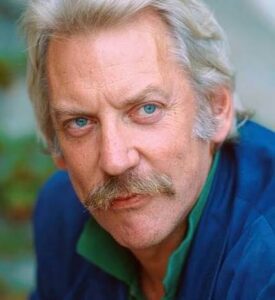 It was on an early Sunday morning in LA in fall of ’81 when I met Donald Sutherland for a brief per-arranged meeting to discuss Sergeant at my request though his agency contact. (Bernie told me I was on my own for this meeting with Donald, though I don’t know why he said that nor why he wouldn’t want to join us, though I frankly felt a little more comfortable meeting and talking to some folks on my own). Sutherland pulled out of a parking lot adjacent to the entrance to Marina del Ray and leaned to his right and opened the passenger door of a brilliantly bright red convertible to a pure-as-the-driven snow all-white leather interior.
“Get in.”
He was soft-spoken and deliberate, talking as much with his eyes as his voice. He said he’d read Sergeant a few days prior to this meeting (now being held in his car) and was overwhelmed by the unique story-telling style of the narration and the unforgettably riveting scenes of Collins’s traumatization while serving in a forward field surgical unit and, later, with Dr. Nieland helping him to piece himself back together again in the psych ward while trying to help his fellow mental patients to mend themselves as best he could, notably ex-intelligence officer, Captain Pollard, who was last seen drowned in a sea of guilt, recrimination and remorse. That said, I asked him if he might consider playing the part of Col. Travis Hepburn, Andy Collins’s commanding officer at the 40th Field Hospital. He smiled and nodded, as if more to himself than to me, and said-to the best of my memory:
“I figured as much. And as much as I’d love to, I can’t. Eye of the Needle’s due for its premier release next week, on the 24th to be exact. To be honest, I’m exhausted. And when I get this exhausted, I know I need a break,” he chuckled, “even though I’m already signed up to work on a new Neil Simon piece. But, you keep me posted on your journey. You know my history as an anti-Vietnam War activist. You know how committed I’ve been starting with Jane [Fonda] and me founding our anti-war troupe, FTA . Your novel’s a testament to all who have struggled-and continue to struggle-with the legacy this war has bequeathed us. And you-you, not Pollard-survived the ruinous sinking of the USS Pequod with your tale intact for those who didn’t, couldn’t, who haven’t, who’ve lost their voice and their sanity along the way. . . . This will not be an easy to get made. Everyone’s pretty much sickened by the Vietnam War. But you’ve got to persist. Your novel far eclipses the Vietnam War, and don’t forget that. It goes to the mind of the matter as much as the heart. And yours is a very different interpretation of ‘winning hearts and minds,’ if you follow me. Winning them back, ours that is.”
He asked for “my autographed copy,” which I’d already signed. We shook hands and he nodded, again, in his own quite way and then said, “I may not be able to directly participate in the making of Sergeant Back Again, but in my own way, I already am. Keep your wits about you.” As he drove off, I lowered my eyes and stared at the spine of a second copy of the book I was somehow still holding in my left hand (for whatever reason) and felt suddenly very, very alone again, “naturally,” as Gilbert O’Sullivan says.
The Sorrow of War is not so much about winning the hearts and minds of Kien’s and Ninh’s countrymen and women as it is about losing them, especially those Vietnamese in the South who were slaughtered by their countrymen from the North in the vacuum created by the American Armed Forces and the US War Machine hightailing it out of the country with their tails between their legs and the simultaneous, spontaneous evaporation of the ARVN. It’s all about killing hearts and minds as so brutally enacted in Ninh’s unforgettable scenes of summary executions of civilian employes of the Airport (particularly at the Air France terminal), the rapes and murders and butchery as byproducts of a civil war masked by the overthrow of a “superior” colonial power instigated by the French and Spanish in 1858 and terminated with the defeat of both the French at Dien Bien Phu in 1954 and the Americans in Vietnam by April 30, 1975, marking the end of 117 years of foreign military occupation. Are we still taking about the same war? With an underling civil war?
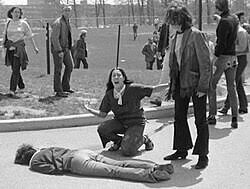 There are parallels. In 1954, on April 7, President Dwight Eisenhower kicked off our own little modern-day Civil War in a speech when he prognosticated how the fall of one nation (e.g. Vietnam) could trigger the collapse of others adjoining it (e.g. Cambodia, Thailand, Loas, Burma) like a line of dominos “overrun by Communist ideologies.” Ironically, Eisenhower’s Domino Theory would be the volley leveled at our own “Fort Sumter” through the sights of a National Guard’s M1 or-14 fired on the campus of Kent State on May 4, 1970 killing four students and wounding nine others during an anti-war rally five years after Johnson ordered the very first American combat troops to Vietnam (March 9, 1975) . . . “and the rest, they say, is history.”
 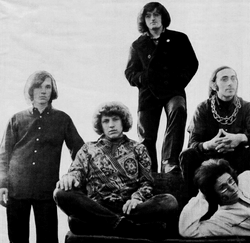 History, like the anti-war protest marches in Washington, the largest ever in the history of the District of Columbia that took place on April 17, ‘65. History, like draft card-burning students carted off handcuffed to local jails across the USA. History, like Country Joe and the Fish releasing their “Feel-Like-I’m-Fixin’-to-Die Rag” (Come on fathers don’t hesitate, be the first on your block to have your boy come home in a box) in November, ’67. Like in the same November when-among the wounded GIs lined up on a muddy, blood-soaked path leading to a forward field medical aid station in Dak To-came the first of many whispers and rumors not of war, but rather of fraud, of “bogus numbers” and of cover-ups followed four months later with the My Lai Massacre (March, ’68) of unarmed civilians in Son My village reported “in living color.” That was history-in-the-making of the slaughter of women, children and babies who were later included with the enemy dead otherwise known as “VC body counts.” Followed by three more years of war, lies and duplicity when Don Mclean released his infamous Bye Bye Miss
  “American Pie” as a fair-the-well to an America that no longer existed by its release date in ’71 (not to mention the ~47,000 American soldiers who didn’t either, who were already dead and buried by then to the sounds of Taps). Somewhere in all of this was the beginning of the Second American Civil War, and you can feel it in Sergeant.
I recall Ted’s solemn face and piercing eyes when he looked up from my MS tapping his pen on one paragraph in particular and said, “You’re absolutely certain?” I nodded, yes. “Do you have any documented proof?” I shook my head, “No.” “But others do,” I said. “So what you ‘know’ for certain is something that someone else ‘knows’ and told you so. That’s called hearsay, even if you put that so-called ‘proof’ in the mouth of your fictional Andy Collins.” “What are you getting at?” I asked. “You’re accusing General William Westmoreland of intentionally lying in documented reports of arbitrarily inflating the number of enemy killed while deflating the number of American dead?” “Yes.” “And you know that Westmoreland was aware of it?” “Aware of it? He ordered it. And, I’m told, he even altered the numbers himself before they were transmitted to The White House.” “You were told this, too? So you didn’t actually see any evidence of this.” “I saw the ‘MEDICAL HOLDING COUNT AND CAUSE’ reports which did not include many of our wounded who later died from battlefield injuries.” “That’s not good enough to put in print when indicting a general of Westmoreland’s stature.” “I’m not indicting anybody.”
We went back and forth for another twenty minutes, me arguing that Sergeant was a novel, written in third person (as he’d requested) and not a documentary or history book written by a journalist or from an eyewitness account. Ted, seeking a compromise, asked me to “remove the direct finger pointing.” “And how do I do that?” “Point obliquely. You can get your macro point across without dwelling on the details of the micro.” (That’s what I later called “editorial Ted-speak.”)
Macro or micro, it all came back to haunt me that fateful day-13 September 1982. When General William Westmoreland filed suit against CBS for libel for their January 1982 documentary hosted by Mike Wallace titled, “The Uncounted Enemy: A Vietnam Deception.” The “deception” was oddly circular with CBS “suggesting” that Westmoreland intentionally “underestimated” the total strength-in-numbers of the North’s combined forces while inflating the number of enemy dead to make it look like the American forces (whose casualty counts he deflated) would and could and “were winning” the war of attrition based primarily on body counts-their bodies, our counts-as a metric of how long the North “could hold out before certain defeat.”
Whatever which way the courtroom battle would turn out, it was game-over for Sergeant. Sergeant Back Again was “damaged goods,” something of a literary leper in that sense, in the sense of a miniseries or a motion picture as Sergeant was shelved as was the screenplay. Not that the novel itself was somehow to blame-in fact, despite a few mixed reviews in which some said it was basically too cerebral to be a “war story”-many others, like George Kearns. et. al-found it to be superbly well written and destined to become an iconic “American cult classic . . . The Vietnam War Novel that Made PTSD Real!”
But we’d been up at bat and I knew Casey would strike out: strike one, Sergeant was about the disastrous American military failure in Vietnam seen through the eyes of a nutcase(s) locked up in an Army psych ward; strike two, no woman, no romance, no heavy petting, no arms to bid farewell to, strike three, tangling with a well-intended ranking military commander whose strategy for simultaneously winning the war and the population’s hearts and minds was based on a simple but flawed mathematical “formula” since he had inaccurate Intel (i.e. “numbers”) to begin with.
Looking back, in my heart and mind, I knew that the probably of Sergeant ever getting made into a 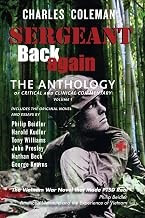 dramatic production in any media was so low as not to be statistically possible. It had (still has) so much going for it—especially in its newest release, Sergeant Back Again: The Anthology of Critical and Clinical Commentary-but it would be impossible to tell the story unless some genius screenwriter focused in on the inner workings of Andy Collins, Col. Hepburn, Dr. Nieland and ex-G2 officer, Capt. Pollard and told their collective story, thereby leaving most of the political banter and the white noise of the Ward on the sidelines much as Ninh does in Sorrow. That would make for an extremely intense drama, one in which the females who do appear in the novel could in fact play an expanded role in a screen version: Pollard’s VC nemesis, Madame Dupre; Ginger, Hepburn’s daughter and Andy’s fleeting “love interest;” Lt. Cummings, the loveable, well-intended but flustered “girl” therapist-in-training hosting group-grope T-sessions in the day room; and the naïve Irma whom Collins engages in a conversation about “War Orphans” while they’re seated at an alcohol-free bar reserved for “rehab-d psychos only.” In other words, another version of the “Vietnam War Novel that Made PTSD Real!” that doesn’t exist.
But there’s still that age-old problem, the one that has to do with the notion that “all’s fair in love and war”-except when the “unfairness” of either or both happens to happen to you! Which brings me full circle to Ninh and The Sorrow: Ninh apparently wrote Sorrow in partial fulfillment of a graduation degree requirement for a Nyguen School of Writing award-the “Nyguen School” being more of a literary art form (than an institution of higher education) that blends political views with contemporary societal and cultural values in the name of the “greater good” (which some critics claim was nothing more than Mao’s Little Red Book “of communist ideological brainwashing propaganda” repackaged by different authors under various, innocuous-sounding titles) like Ninh’s Sorrow, which he originally published under the title The Destiny of Love. Say that again: The Destiny of What? Love? When Mao himself proclaimed that “Communism is Not love” (in most editions of the LRB) and that there is no place for personal emotion or feelings other than “the love of the State and the People.” What about Ninh’s love of Phuong and hers for him? Doesn’t love ultimately prevail? Even somewhere in the loneliness of alcoholism or the soullessness of prostitution as punishment for surviving physical abuse and psychological trauma played out in a perverted rendition of a survivor’s soiled guilt, in this case Phuong’s?
Rumor has it that Ninh changed his original title for The Sorrow of War to The Destiny of Love to try to circumvent the common practice of State bureaucrats censoring and prohibiting any media critical of State policy or mandates. But the censors weren’t interested in routing out star-crossed love affairs gone sideways, they were looking for radical dissenters and activist anti-government actors who were playing out their rants and raves in every venue imaginable from underground “provocative theaters” to organized gangs of hoodlums marching in “black PJs and flipflops” with torches of a Second Revolutionary Front aglow. [That was the cliched, Americanized version of the Counter to Mao’s “Cultural Revolution.”]
In many ways, Sorrow is about trauma and tragedy at the Heart of War whereas Sergeant is more about the tragedy and trauma in the Mind of Warriors . . . interesting that we’re back again to “Winning Hearts and Minds” as a cliched British-American occupying-force strategy when there are only “Losers of Hearts and Minds” when viewing the litany of My Lai Massacres and the bodies of undergrads lying dead on the campus of Kent State while American families were passing the meat-and-potatoes watching The CBS Six O’clock Evening News with Walter Cronkite-newscasts I suspect Ninh, Kien and Phuong never saw, probably because they were among the extras.
Are the two novels flipsides of the same story? My short answer: no on the micro level but yes at the macro. The whole story is the sum of its many parts, of which The Sorrow of War and Sergeant Back Again are two big pieces-maybe you, as readers, can find a way to rejoin them at the hip, to make them of one cloth again, the human kind, from which we’re all cut.